Check a medical bill that seems too high
Before you pay, compare the bill with your Explanation of Benefits, ask for an itemized bill and the cash price, ask about financial assistance and see if surprise-billing rules apply. About 10 minutes to read; the calls take longer.
Watch it (1:53, no sound)
- Denied But Heard is a private draft and hasn't launched yet. Open it from the link you were given (it will be deniedbutheard.org).
- The bill, and the Explanation of Benefits (EOB) your plan sent for the same visit. The EOB usually comes by mail or in the plan's website or app.
- Something to write on, to note who you talked to and when.
Step by step
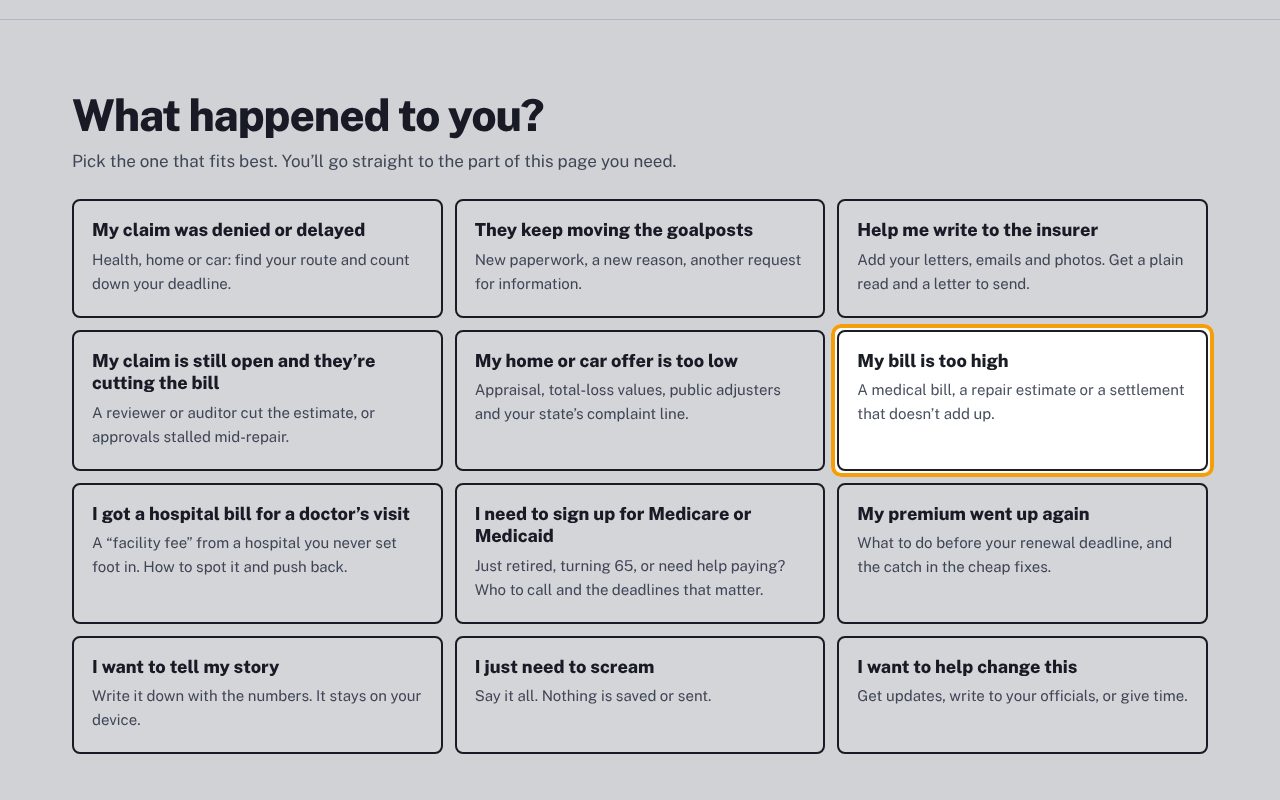
1Pick My bill is too high
Open the site and click Start here. Under What happened to you?, click My bill is too high. (My bill in the menu at the top goes to the same place.)
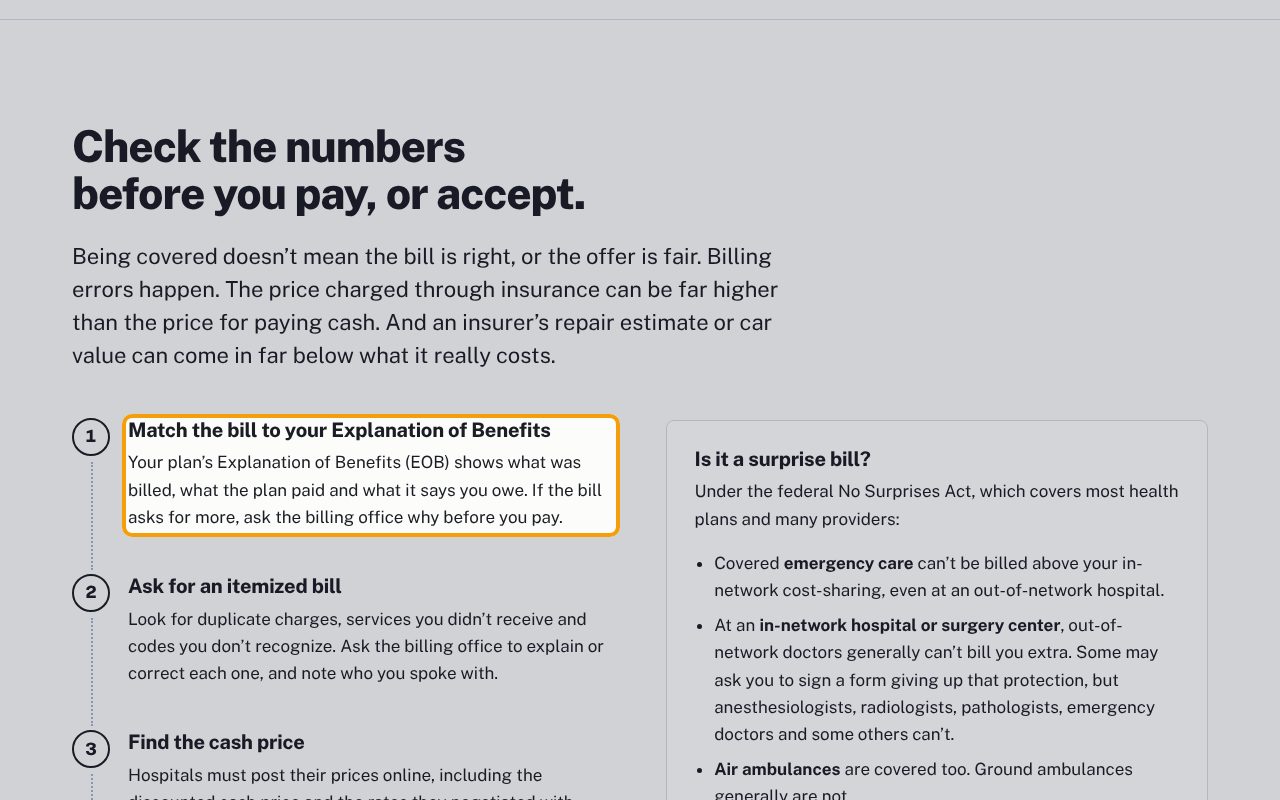
2Match the bill to your EOB
You're on Check the numbers before you pay, or accept. First, Match the bill to your Explanation of Benefits: the EOB shows what was billed, what the plan paid and what it says you owe. If the bill asks for more than the EOB says, ask the billing office why before you pay.
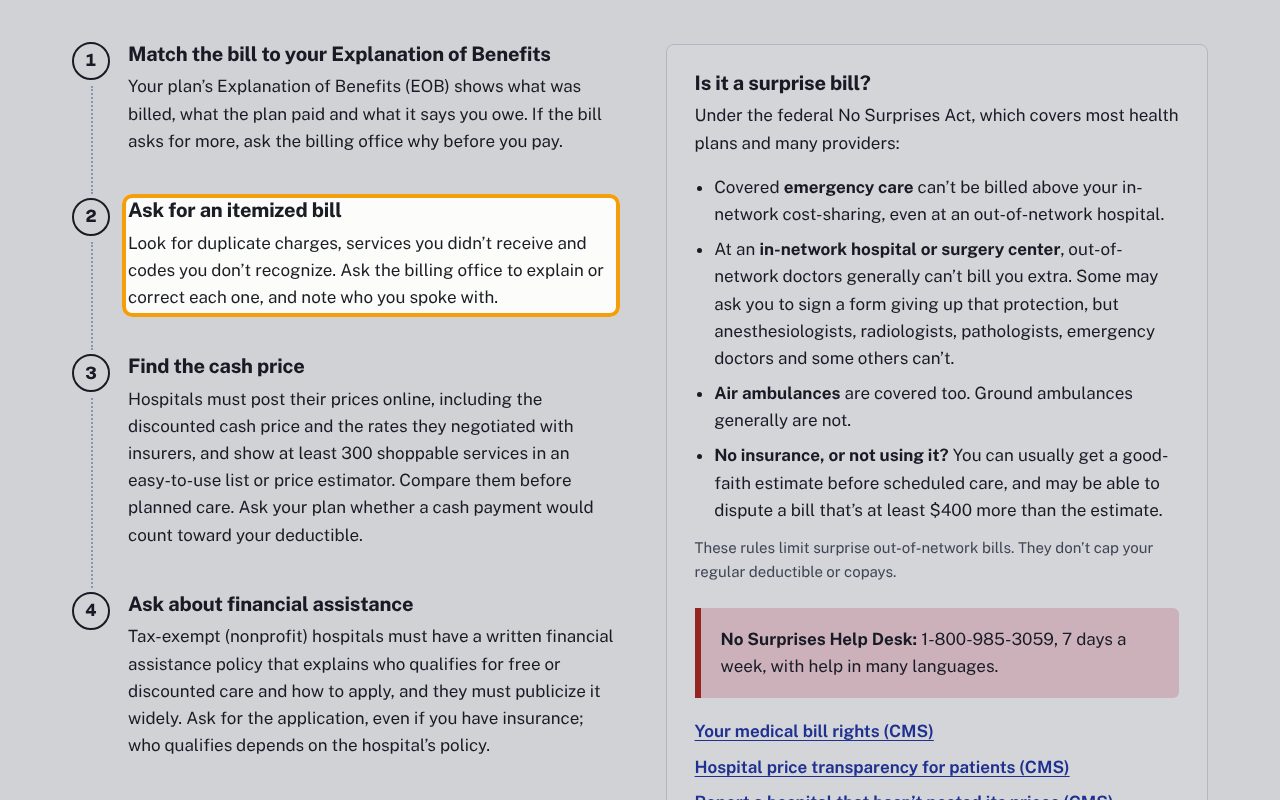
3Ask for an itemized bill
Next, Ask for an itemized bill. Look for charges listed twice, services you didn't get and codes you don't recognize. Ask the billing office to explain or fix each one, and write down who you spoke with.
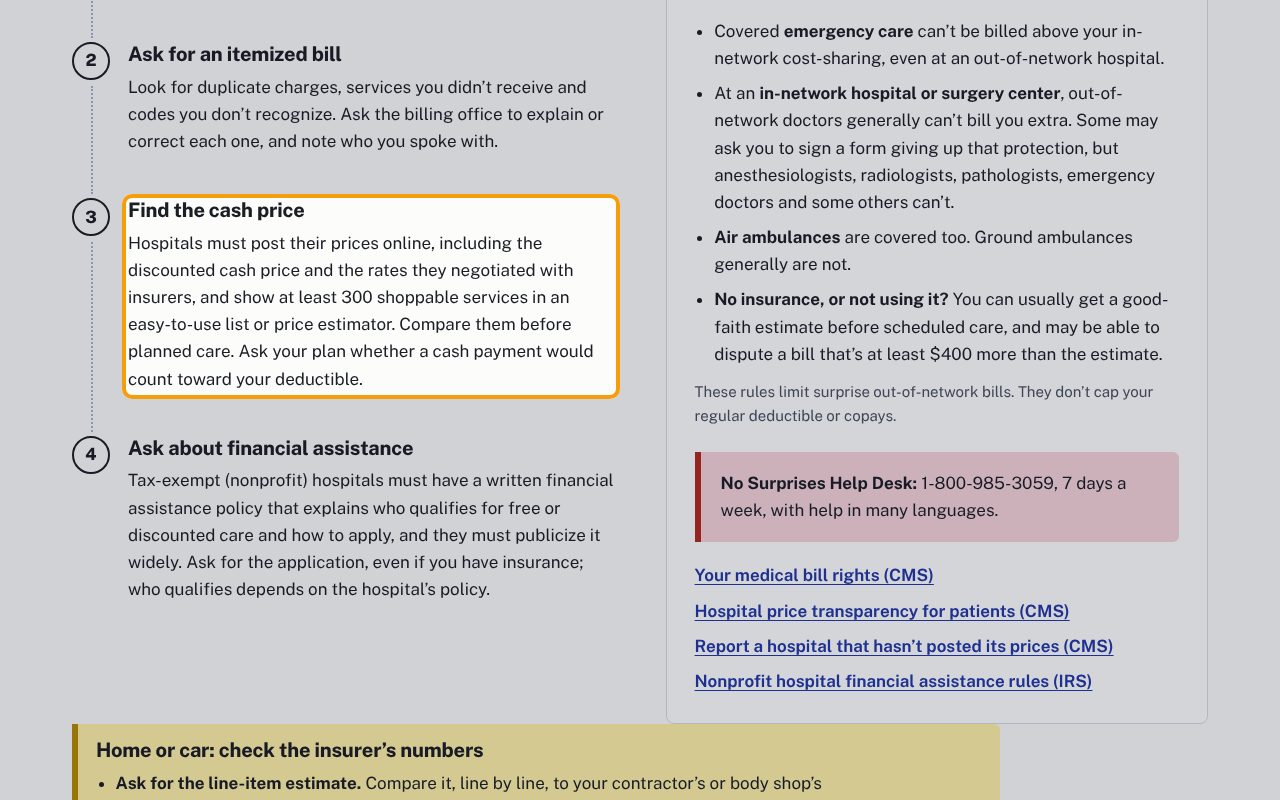
4Find the cash price
Find the cash price: hospitals must post their prices online, including the discounted cash price. Compare before planned care, and ask your plan whether paying cash would count toward your deductible. Write down both numbers when you get them.
5Ask about financial assistance
Ask about financial assistance: nonprofit hospitals must have a written policy on free or discounted care. Ask the hospital for the application, even if you have insurance; who qualifies depends on the hospital's policy.
6Is it a surprise bill?
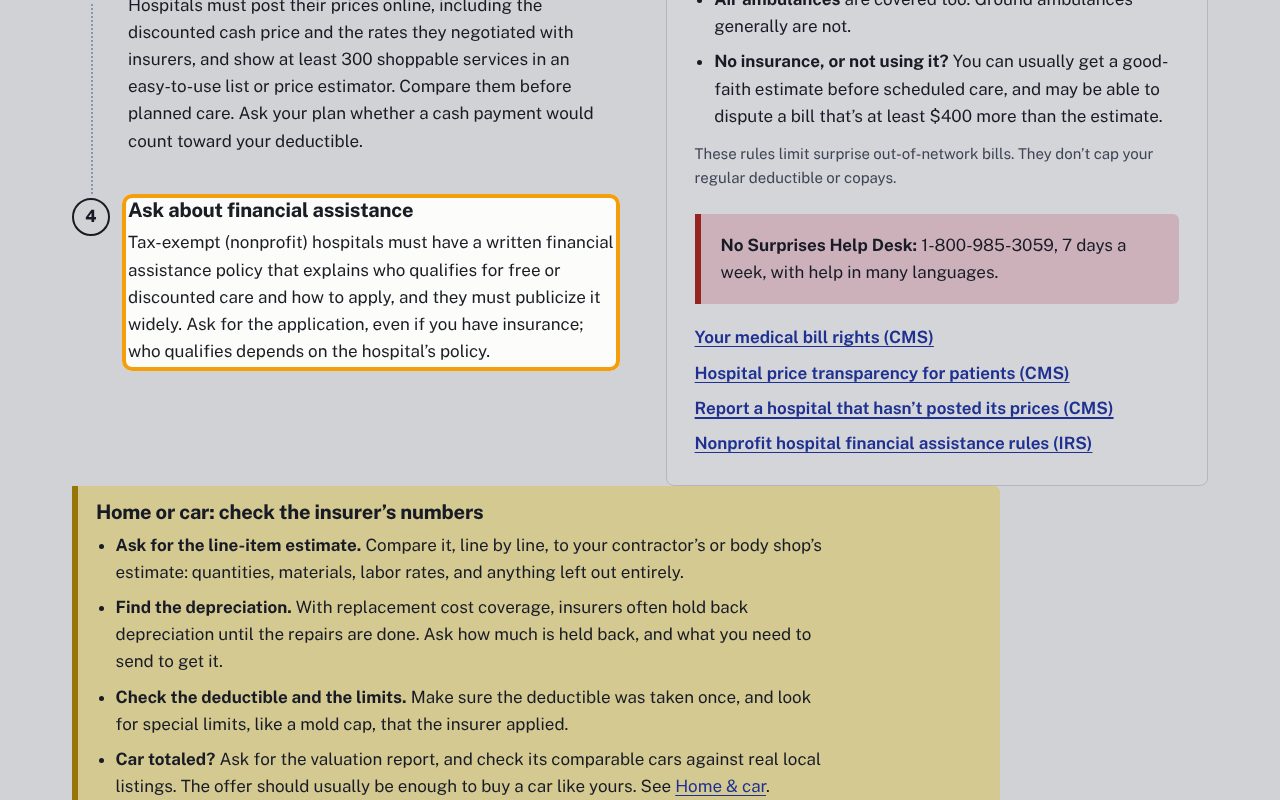
On the right, Is it a surprise bill? lists what the federal No Surprises Act covers: covered emergency care, out-of-network doctors at an in-network hospital or surgery center, and Air ambulances. It notes that ground ambulances generally are not covered, and that these rules don't cap your regular deductible or copays.
7Call the help desk or read the official pages
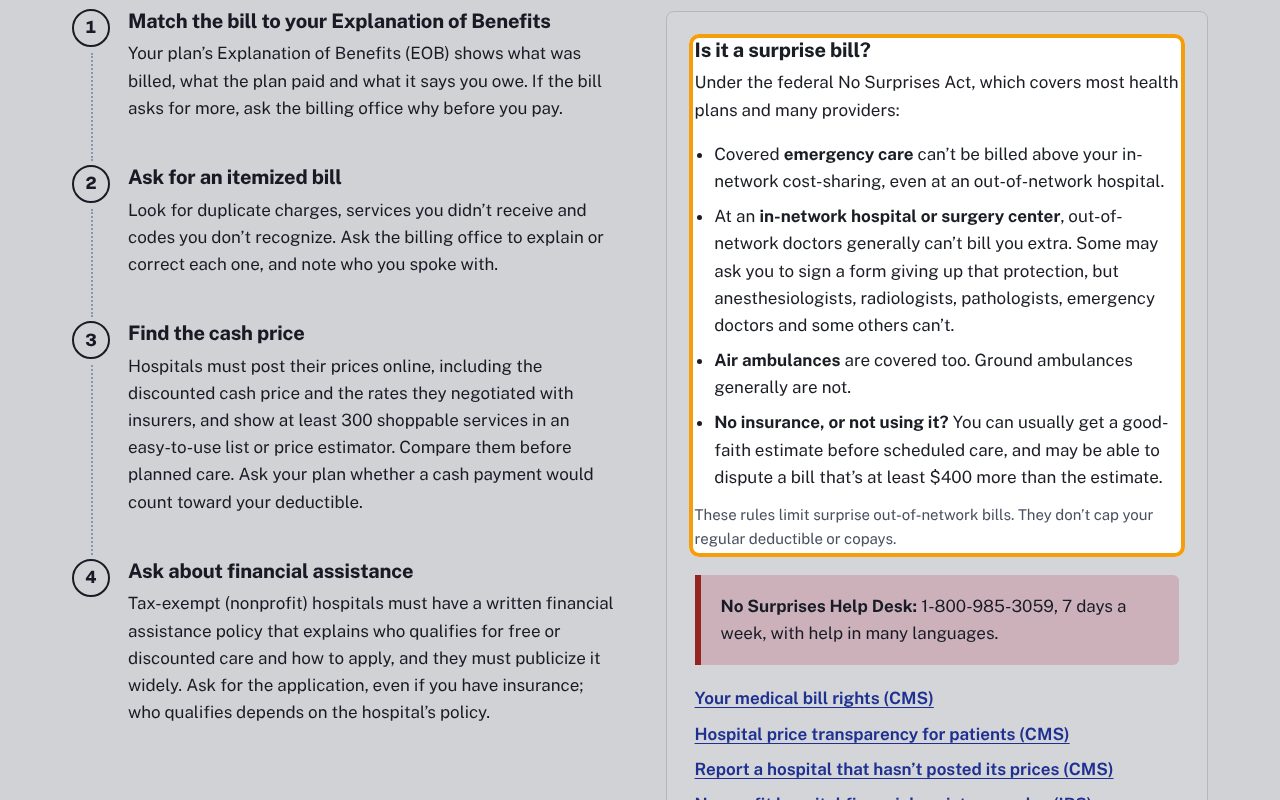
For a possible surprise bill, call the No Surprises Help Desk: 1-800-985-3059, 7 days a week, with help in many languages. The links under it go to the federal agencies (CMS and the IRS) and open in a new tab, for example Your medical bill rights (CMS).
8Keep both numbers
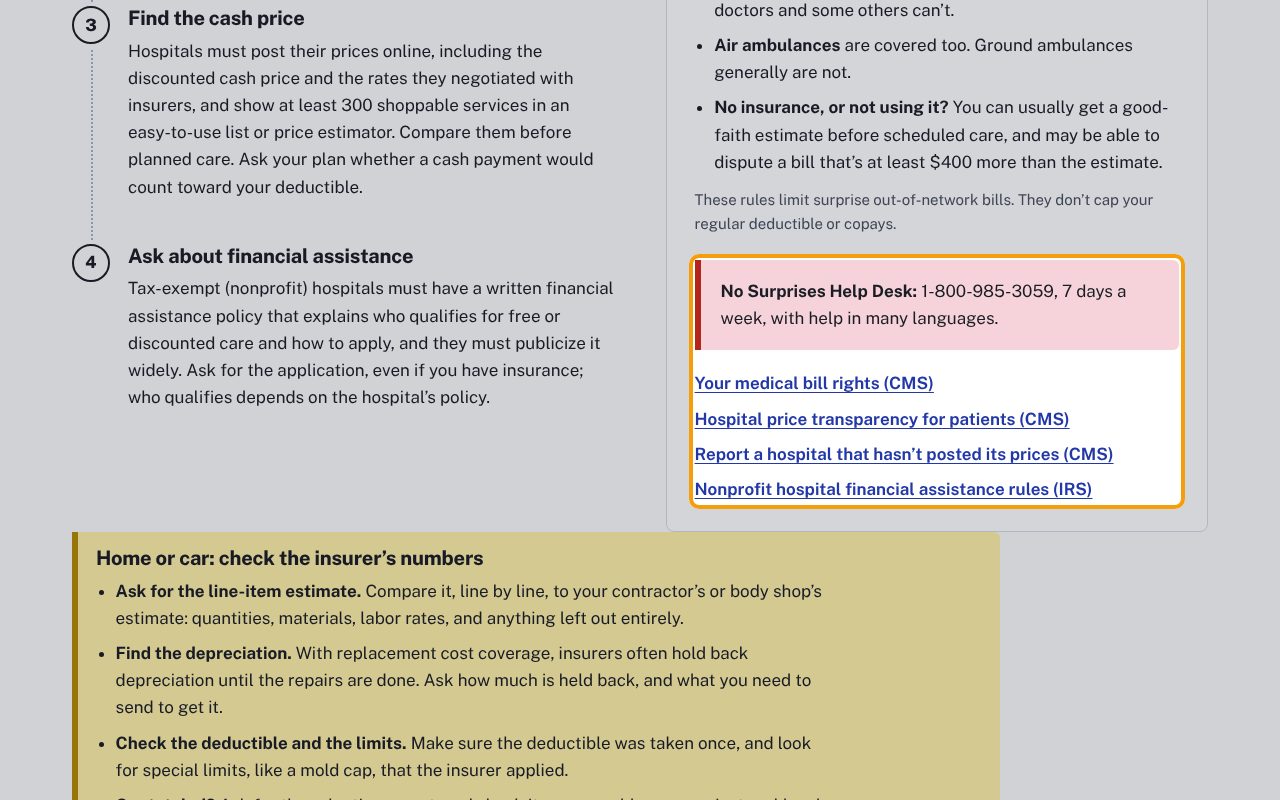
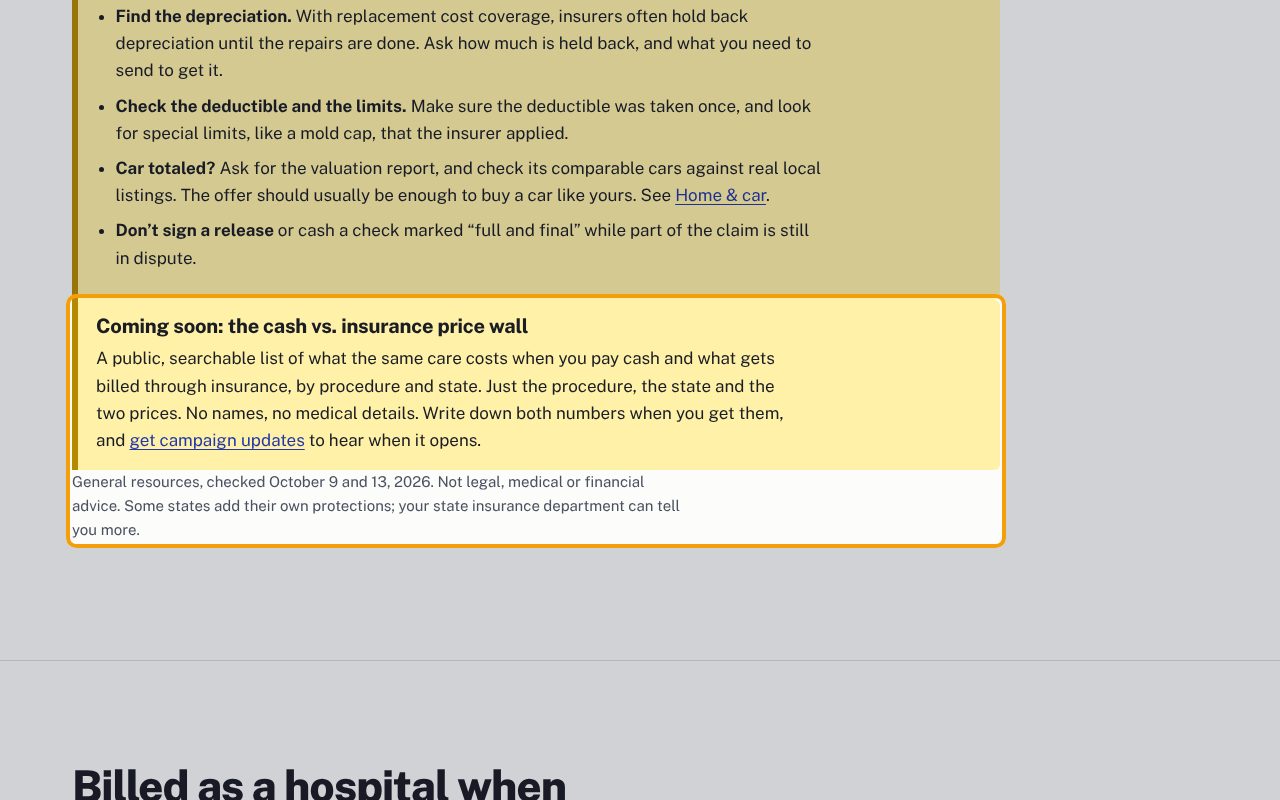
Further down, Coming soon: the cash vs. insurance price wall asks you to write down the cash price and the insurance price when you get them. The note at the bottom says this is general information, Not legal, medical or financial advice, and your state insurance department can tell you about your state's protections.
If something goes wrong
- I don't have an EOB
- Your plan sends one after it processes the claim. Look in the plan's website or app, or call the member services number on your insurance card and ask for it.
- The bill and the EOB don't match
- Don't pay the difference yet. Call the billing office, ask why, and note the date, the name and what they said.
- I'm not sure it's a surprise bill
- Call the No Surprises Help Desk at 1-800-985-3059 and describe what happened.
- I want to write it all down
- Use the story worksheet on the same site (see Write down what happened, check it for private details, and save it). Its The numbers section has boxes for the amount billed, what insurance paid, what you owe and the cash price.